Fear Only Exists in the Vague
2 Minute Read
Specificity turns anxiety into something we can actually work with.
Vagueness Is What Fuels Anxiety
Most training anxiety isn’t rooted in reality. It’s rooted in vagueness.
We say things like “I’m nervous about this race” or “I’m worried my training isn’t enough.” Those statements feel real, but they’re completely undefined. And when a concern stays undefined, the mind fills in the gaps with worst-case scenarios. We imagine failure, discomfort, embarrassment, or extreme regret, all without ever naming what’s actually at risk.
Fear thrives here. Not because the situation is dangerous, but because it’s unclear.
The mind is very good at amplifying vague threats. It’s significantly harder to panic when the details are laid out plainly.
What We’re Usually Afraid Of (But Don’t Say Out Loud)
Let's do an example.
Say you have a race that’s four months away, and you're feeling anxious about it. Really anxious. Picture whatever that looks like for you.
That anxiety usually isn’t about the race. It’s about a collection of unnamed fears hiding underneath it.
So, what are we worried about specifically? We have to spell it out with extreme clarity. Are we worried we won’t be able to train enough? That the race will be physically uncomfortable? That we’re starting too late? That fueling won’t work? That we’ll underperform relative to our expectations?
Each of those is a different problem. And each one has a different solution.
When we don’t separate them, they collapse into a single emotional blob labeled “stress.” That blob feels overwhelming precisely because it has no shape. Once we start naming the parts, the fear loses its grip.
Specificity Shrinks the Problem
This is where specificity matters.
If the concern is training time, spell it out. Is there a busy season at work? How long does it last? Which days does it affect? Does it eliminate all training, or just some weekdays? Do weekends still exist? Can mornings still work?
When we do this honestly, two things usually happen:
1. The problem gets smaller. What felt like “I won’t be able to train” often turns into “I’ll miss one or two weekday runs for three weeks.” That’s not ideal, but it’s manageable.
2. The solution becomes obvious. Once we know what’s actually constrained, we can adjust intelligently. Shift volume. Protect key sessions. Lower expectations temporarily. Maintain the routine instead of abandoning it.
Vague fear offers no leverage. Specific constraints do.
Why Worst-Case Scenarios Lose Power When Named
Another benefit of specificity is that it forces us to confront outcomes realistically.
When fear stays vague, the worst case feels catastrophic. When we name it clearly, it almost never is.
What’s the actual worst-case scenario? We don’t hit a PR. The race feels harder than we hoped. Training is imperfect. We learn something and move on.
That’s uncomfortable, not disastrous.
And just as importantly: it’s rarely the most likely outcome. The most likely outcome is usually somewhere in the middle: imperfect, but productive. Growth still happens. Fitness still builds. Identity still strengthens.
Fear survives on imagined extremes. Specificity pulls us back to probability.
Specificity Turns Emotion Into Action
The real advantage of being specific isn’t emotional relief. It’s control.
Once we define the problem clearly, we can act. We can adjust the plan instead of questioning it. We can focus on what’s within our control instead of reacting to a feeling. Anxiety turns into logistics. Stress turns into scheduling. Fear becomes something we can solve.
This is the difference between managing training emotionally and managing it deliberately.
Routine thrives here. When the plan accounts for reality, it becomes harder to derail. We stop negotiating with our fears and start working with facts.
Wrap It Up
Fear feels powerful when it’s vague. It feels manageable when it’s specific.
Most training anxiety isn’t telling us that something is wrong. It’s telling us that something is undefined. When we slow down, name the real concern, and break it into its actual parts, the threat shrinks and the path forward clears.
Specificity doesn’t eliminate difficulty. It eliminates distortion.
With this mindset, we build a routine we love and train consistently.
More Motivation
View all-

-

-

Nobody's Watching You
We think everyone is watching, and judging, us. No one is. And believing they are, will wreck our training.
Nobody's Watching You
We think everyone is watching, and judging, us. No one is. And believing they are, will wreck our training.
-

Pay the Price, or Pick a New Goal
There are no good goals or bad goals. There is only what a goal costs, what it gives back, and whether that trade is worth it for you.
Pay the Price, or Pick a New Goal
There are no good goals or bad goals. There is only what a goal costs, what it gives back, and whether that trade is worth it for you.


Fuel your training
-
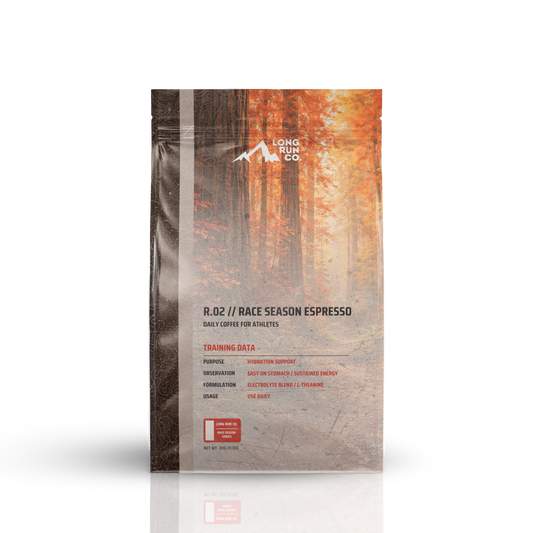
Race Season: Long Run Coffee
Regular price $25.32Regular priceUnit price -
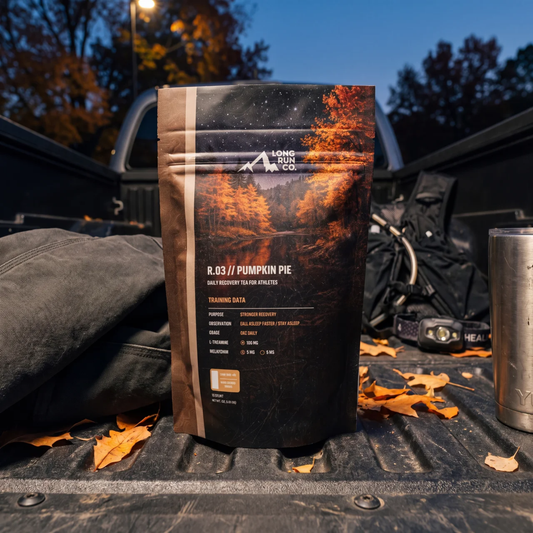
Race Season: Rest & Recover Tea
Regular price $19.99Regular priceUnit price -
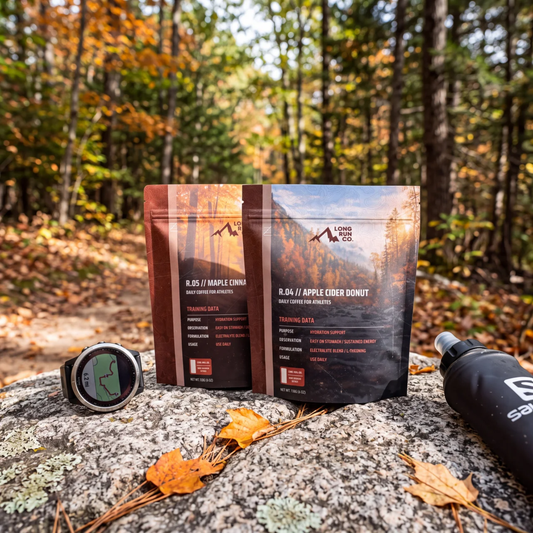
Apple Cider Donut | Maple Cinnamon | Pumpkin Pecan
Regular price $29.99Regular priceUnit price34.89Sale price $29.99Sale -
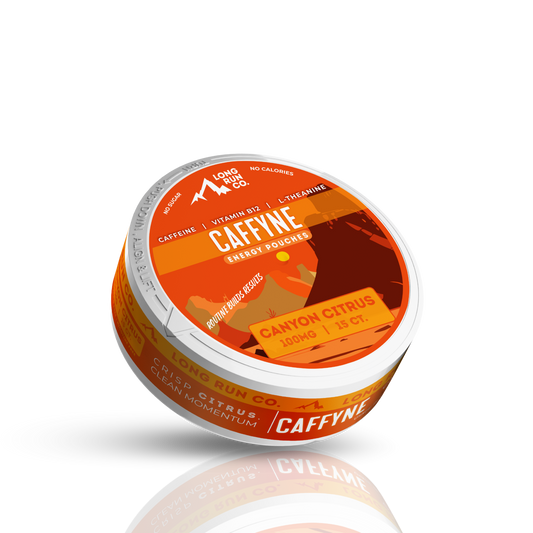
CAFFYNE Energy Pouches
Regular price $6.79Regular priceUnit price0.00Sale price $6.79 -
Race Season: LRC x YETI 16oz Travel Bottle
Regular price $39.00Regular priceUnit price49.00Sale price $39.00Sale -
Backcountry: Long Run Coffee
Regular price $23.99Regular priceUnit price -
Backcountry: Rest & Recover Tea
Regular price $17.32Regular priceUnit price -
Backcountry: PB Chocolate / S'mores / Cookies & Cream
Regular price $29.99Regular priceUnit price34.89Sale price $29.99Sold out