What We Repeat Is Who We Become
2 Minute Read
The patterns we repeat become the way we operate.
We Understand Physical Adaptation
We all understand the physical side of training: run consistently, and aerobic fitness improves. Lift consistently, and strength increases. We apply stress, recover from it, and over time the body becomes more capable of handling that same stress. Got it. Nothing crazy.
That part makes sense to us because it is visible. We can see pace improve. We can feel endurance build. We can watch mileage increase. The connection between repeated work and physical progress is tangible.
But, less obviously, training also shapes how we think.
Because every workout doesn't just place stress on the body. It also creates an emotional and mental stimulus. When a run goes well, when something feels off, when we miss a session, etc., we respond mentally, whether we realize it or not.
How we respond mentally is important. It is part of the training too.
We Are Always Practicing a Response
When something goes wrong in training, we don’t just experience it. We interpret it. We react to it. We decide what it means.
A bad run can become panic. A heavy week can become doubt. A small ache can become a full mental spiral. One missed session can become a story about being off track. And if those reactions happen repeatedly, they stop being isolated moments. They become patterns. And patterns become habits.
Just like the body adapts to repeated physical stress, the mind adapts to repeated emotional responses. If we repeatedly overreact, we get "better" at overreacting. If we repeatedly question the plan, we get "better" at questioning the plan. If we repeatedly seek reassurance every time training feels imperfect, the brain starts treating reassurance-seeking as the default response to discomfort.
None of this means we are weak. It means we are trainable. And if we are trainable, then our reactions matter.
Bad Patterns Get Repeated Too
This is what makes the idea important. We assume our mental habits are just personality. We think we're naturally anxious, naturally reactive, naturally impatient, naturally prone to second-guessing. That doesn't have to be true. Those patterns are simply ones we've made habits out of.
Perhaps a bit of an anecdote, but everyone at Long Run has experienced this: have you ever had a phase of life where you get anxious around the same time each day? If yes, this proves the point. The brain learns patterns. We train our emotional stated, and we can train it to be positive or negative.
That's a real danger. And our mental state is always connected to our body. Anxiety, panic, and overreaction don’t just stay in the mind. They show up physically. Breathing becomes shallow, muscles tighten, effort feels harder than it should, and recovery is worse.
And, of course, that makes training much harder than it needs to be.
Calm Is Trainable Too
Good news! This works both ways.
If we can train panic, doubt, and overreaction, we can also train steadiness, confidence, and control. What becomes familiar is what we repeat. What we repeat becomes default.
Confidence is not something we wait to feel. It is something we build by repeatedly handling situations well. Calm is not a personality trait. It is a practiced response. The more often we return to the plan, trust the process, and avoid overreacting, the more natural that behavior becomes.
And, eventually, we don’t even have to think about it.
Importantly, it's not a matter of forcing ourselves to feel a certain way. And the claim we're making, is not that we should repress emotions. Rather, there is always a positive emotion available. And we're suggesting that we make the active choice, to repeatedly choosing responses that support progress. Do that until positive reactions become who we are.
Wrap It Up
The body adapts to repeated work. The mind adapts to repeated emotions.
That means every time we train, we are building more than fitness. We are also reinforcing the way we interpret discomfort, handle uncertainty, and respond to imperfect days. If our reactions are chaotic, that gets practiced too. But if our responses are calm, measured, and steady, those patterns become stronger as well.
Training is never just physical. It is always teaching us how to respond.
With this mindset, we build a routine we love and train consistently.
More Motivation
View all-

-

-

Nobody's Watching You
We think everyone is watching, and judging, us. No one is. And believing they are, will wreck our training.
Nobody's Watching You
We think everyone is watching, and judging, us. No one is. And believing they are, will wreck our training.
-

Pay the Price, or Pick a New Goal
There are no good goals or bad goals. There is only what a goal costs, what it gives back, and whether that trade is worth it for you.
Pay the Price, or Pick a New Goal
There are no good goals or bad goals. There is only what a goal costs, what it gives back, and whether that trade is worth it for you.


Fuel your training
-
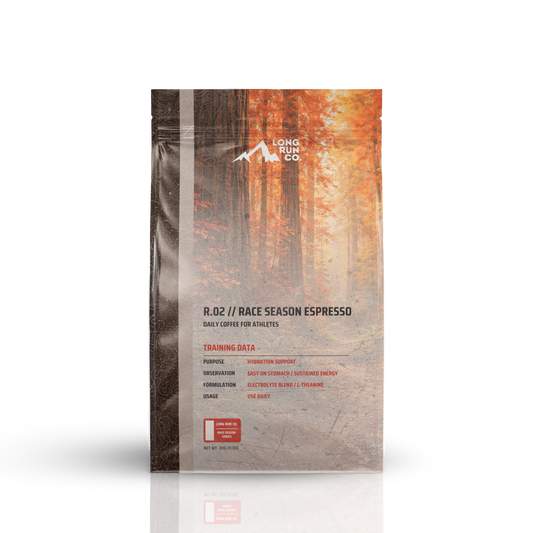
Race Season: Long Run Coffee
Regular price $25.32Regular priceUnit price -
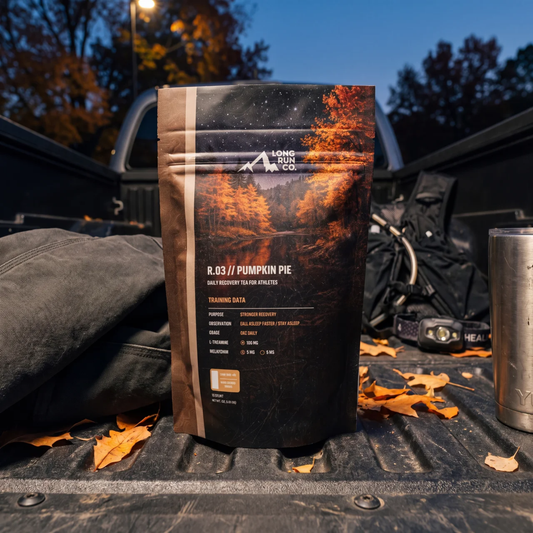
Race Season: Rest & Recover Tea
Regular price $19.99Regular priceUnit price -
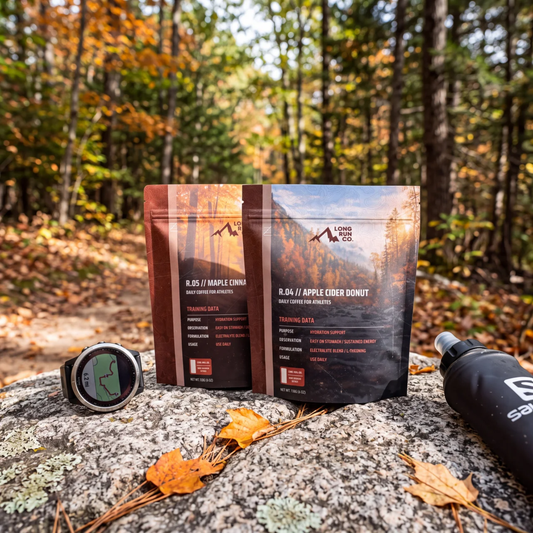
Apple Cider Donut | Maple Cinnamon | Pumpkin Pecan
Regular price $29.99Regular priceUnit price34.89Sale price $29.99Sale -
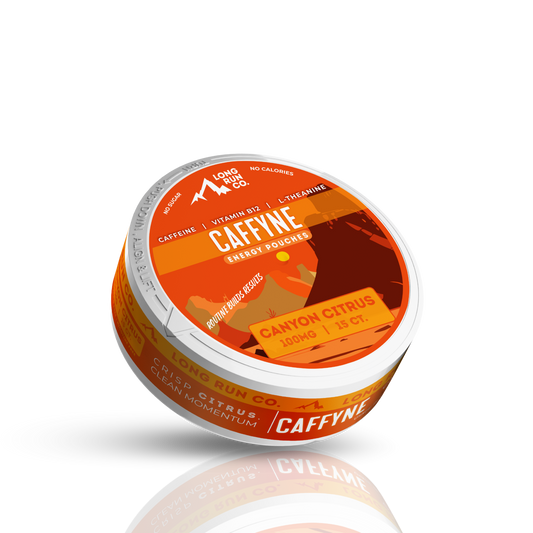
CAFFYNE Energy Pouches
Regular price $6.79Regular priceUnit price0.00Sale price $6.79 -
Race Season: LRC x YETI 16oz Travel Bottle
Regular price $39.00Regular priceUnit price49.00Sale price $39.00Sale -
Backcountry: Long Run Coffee
Regular price $23.99Regular priceUnit price -
Backcountry: Rest & Recover Tea
Regular price $17.32Regular priceUnit price -
Backcountry: PB Chocolate / S'mores / Cookies & Cream
Regular price $29.99Regular priceUnit price34.89Sale price $29.99Sold out