The Body Reports Back Late
2 Minute Read
Today's session won't show up for weeks. Stop judging it by how today felt.
The Feeling We All Know
We finish a workout and immediately try to grade it.
The session felt heavy. The legs were flat. Our watch tells us we ran slower, biked weaker, or swam sloppier than last week. We start the math right there in the driveway. Are we losing fitness? Is the plan wrong? Did we overdo it on Tuesday? Should we change something tomorrow?
Within ten minutes of finishing, we've built a whole case for why our training is failing.
This is something most of us do without realizing it. We treat every session like a final exam. Pass or fail, today.
But that is not how the body works.
The Body Is Always Recording, Just Not in Real Time
Adaptation is not a same-day event. It is a process that takes weeks.
When we train, we are not creating fitness in the moment. We are creating a signal. The signal goes to the body, and the body responds by building. It rebuilds tissue, grows capillaries, expands mitochondrial density, strengthens connective tissue, adjusts hormones. None of this happens during the workout. It happens in the days and weeks that follow.
This is why a great session does not always feel great. The work and the result are separated by time. Sometimes weeks of time. The session we do today shows up in our legs three or four weeks from now, not this afternoon.
Which means how today felt is one of the worst possible ways to judge today's training. Today's feeling is a report on the past few weeks of work. It is not a report on today.
We are reading the wrong page.
Why This Trips Us Up
Most athletes are pattern-seekers. We want fast feedback so we can adjust. That instinct is useful in a lot of places in life. In training, it backfires.
When we judge a session by how it felt in the moment, we end up reacting to noise. A bad workout might mean we are under-recovered. It might mean we slept poorly. It might mean we have a virus we don't know about yet. Or it might mean nothing at all, and the next session will feel completely different. None of that is a verdict on the plan.
If we react to every bad session as if it is a final score, we will be tempted to change the plan constantly. Which is the fastest way to undo the work that has been quietly building underneath us this whole time. The adaptation needs time to surface. Yanking the plan around interrupts the process before it can show up in our legs.
The athletes who stick with it the longest tend to be the ones who can sit through a few weeks of "this feels bad" without panicking. They know the report is going to come in eventually. It is just not coming in today.
How to Judge Training Actually
A few things help.
Zoom out. The smallest useful window for evaluating training is about three weeks, not three days. If we want to know if training is working, look at the last block, not the last session.
Track trend, not snapshots. One slow session is a data point. Eight weeks of slow sessions is a trend. The first one is noise. The second one is signal.
Separate the session from the verdict. We can have a bad workout without it meaning anything about our fitness. A hard day in training is not a grade. It is a deposit.
And when a session feels great, apply the same logic in reverse. A magical session today is not proof we are about to set a personal best next weekend. It is just one good signal in a much longer pattern. We do not have to ride the highs any harder than we ride the lows.
Wrap It Up
The body reports back late. Today's session will not tell us anything useful about today.
If we want to know how training is going, we have to give the body time to file its report. That report comes in weeks, not hours. The athletes who wait for it get to keep building. The ones who react to every session end up redoing the same work over and over again.
With this mindset, we build a routine we love and train consistently.
More Motivation
View all-

-

-

Nobody's Watching You
We think everyone is watching, and judging, us. No one is. And believing they are, will wreck our training.
Nobody's Watching You
We think everyone is watching, and judging, us. No one is. And believing they are, will wreck our training.
-

Pay the Price, or Pick a New Goal
There are no good goals or bad goals. There is only what a goal costs, what it gives back, and whether that trade is worth it for you.
Pay the Price, or Pick a New Goal
There are no good goals or bad goals. There is only what a goal costs, what it gives back, and whether that trade is worth it for you.


Fuel your training
-
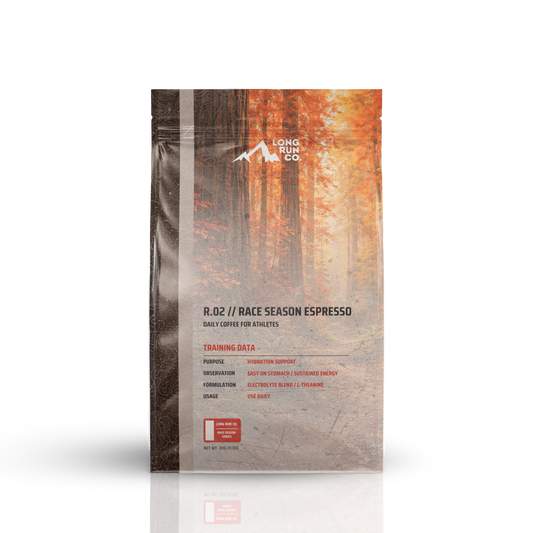
Race Season: Long Run Coffee
Regular price $25.32Regular priceUnit price -
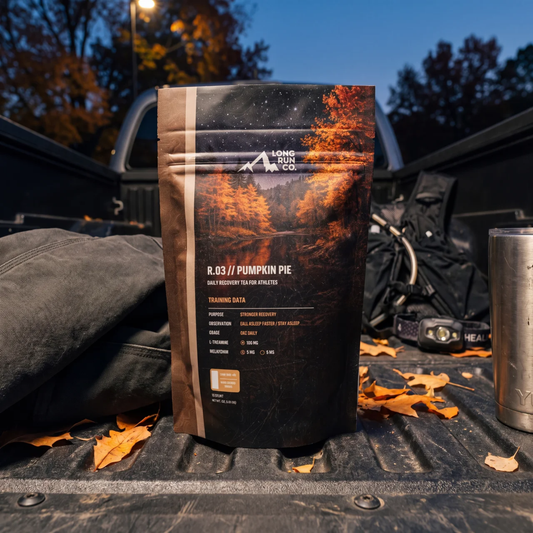
Race Season: Rest & Recover Tea
Regular price $19.99Regular priceUnit price -
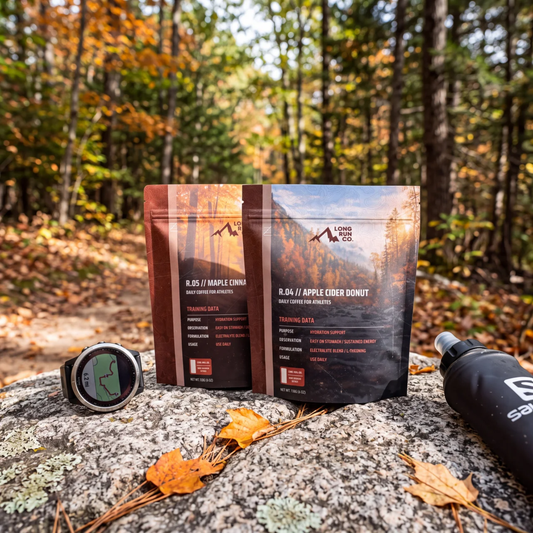
Apple Cider Donut | Maple Cinnamon | Pumpkin Pecan
Regular price $29.99Regular priceUnit price34.89Sale price $29.99Sale -
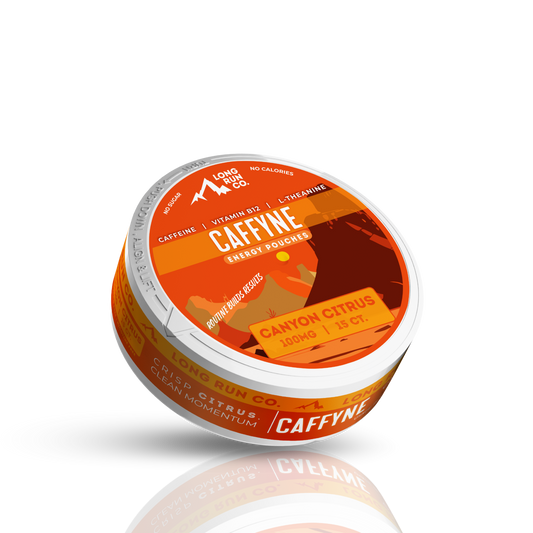
CAFFYNE Energy Pouches
Regular price $6.79Regular priceUnit price0.00Sale price $6.79 -
Race Season: LRC x YETI 16oz Travel Bottle
Regular price $39.00Regular priceUnit price49.00Sale price $39.00Sale -
Backcountry: Long Run Coffee
Regular price $23.99Regular priceUnit price -
Backcountry: Rest & Recover Tea
Regular price $17.32Regular priceUnit price -
Backcountry: PB Chocolate / S'mores / Cookies & Cream
Regular price $29.99Regular priceUnit price34.89Sale price $29.99Sold out